


The Invisible Infrastructure of a Great Association Conference
- Derrick Aubie

- Dec 16, 2025
- 2 min read
Updated: Jan 30


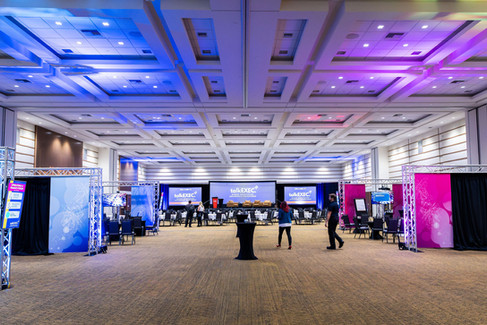
When association leaders reflect on a successful conference, they often talk about the speakers, the networking, the energy in the room, or the clarity of the conversations that took place.
What rarely comes up - unless something goes wrong - is the audio-visual experience.
And yet, AV is the invisible infrastructure that supports almost every meaningful moment of a conference.
When it’s done well, members stay engaged, speakers feel confident, and the program flows seamlessly. When it isn’t, even the strongest agenda can lose momentum. For Executive Directors and conference planners, understanding the role AV plays - beyond “mics and screens” - is essential.
Why AV Is a Strategic Decision, Not a Technical One
Association conferences are uniquely complex. They often include:
Multiple concurrent sessions
Diverse speakers with varying levels of presentation experience
Bilingual or accessibility requirements
Hybrid or livestreamed components
Tight timelines and evolving agendas
In this environment, AV decisions directly affect how well ideas are communicated, how inclusive the event feels, and how professional the organization appears to its members and stakeholders.
Clear sound ensures every voice is heard - literally and figuratively. Thoughtful visual setups help audiences stay focused and reduce cognitive fatigue. Smooth transitions maintain energy and trust in the program.
These outcomes don’t happen by accident. They are the result of planning, anticipation, and experience.
What Conference Leaders Should Look for in AV Support
For association leaders who may only plan one major conference per year, it can be hard to know what “good AV” actually looks like behind the scenes.
A few indicators matter more than equipment lists:
Understanding conference flow: An AV partner should anticipate session overlaps, speaker changes, and timing pressure - not just react to them.
Experience with association formats: AGMs, awards galas, policy sessions, and educational breakouts all require different technical approaches.
Comfort with bilingual and accessible events: Supporting interpretation, captioning, or hybrid audiences requires specialized knowledge and preparation.
Proactive communication: The best AV teams solve problems quietly before they impact attendees or presenters.
Ultimately, strong AV support allows organizers to focus on their members - not the mechanics of the room.
The Value of Local Knowledge
There is also a practical advantage to working with AV partners who understand your region. Familiarity with venues, hotel layouts, and local logistics reduces risk and increases efficiency. It also allows for faster on-site decision-making when plans inevitably shift.
For associations, especially those rooted in community and regional impact, working with local partners can also align with broader values around sustainability, relationships, and economic contribution.
When Everything Works, No One Notices - And That’s the Point
The hallmark of excellent AV isn’t visibility; it’s reliability. When speakers feel supported, attendees stay engaged, and transitions feel effortless, the technology fades into the background - exactly where it belongs.
Behind that seamless experience is a team that treats the event as a partnership, understands the stakes, and cares about the outcome as much as the organizer does.
This article is contributed by Sonic Image, a New Brunswick–based audio-visual company that supports association conferences, AGMs, and events across Atlantic Canada.


Comments